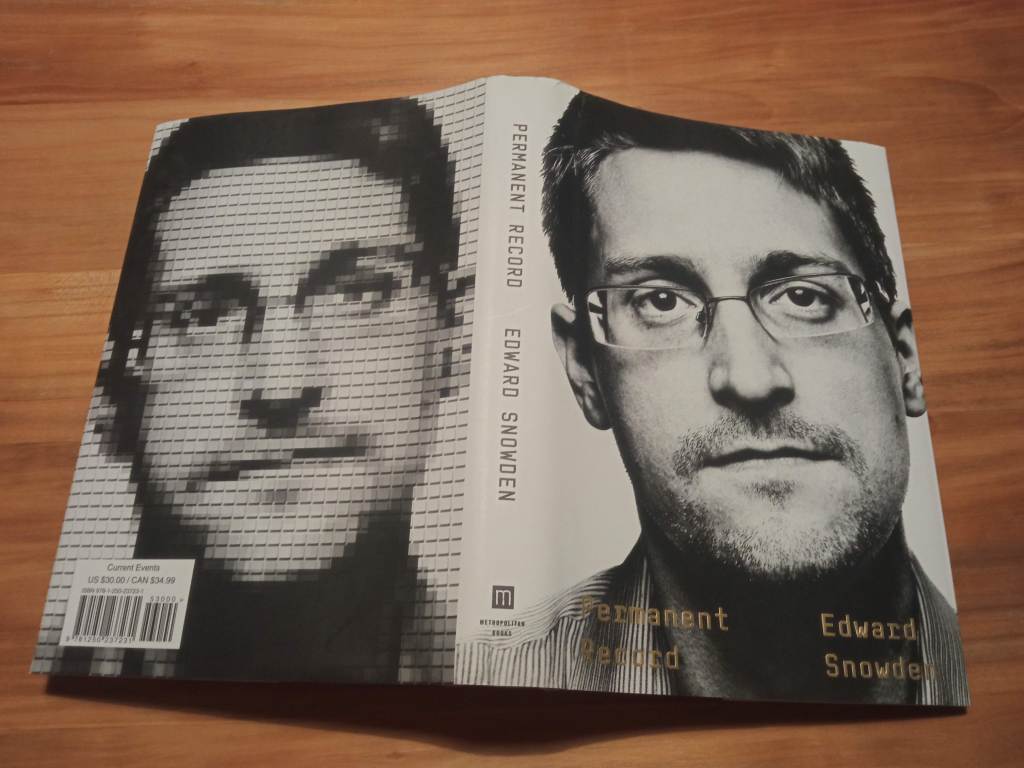
Edward Snowden’s compelling memoir, “Permanent Record,” is an eye-opening exploration of the dangers posed by extensive data collection and storage.
Edward Snowden’s Revelations on Government Surveillance
In “Permanent Record,” Snowden unveils the risks inherent in the combination of ubiquitous data collection and permanent storage. Governments, he warns, can use this powerful tool to selectively target individuals or groups, raising concerns about the misuse of surveillance systems for political agendas and scapegoating.
“Once the ubiquity of collection was combined with the permanency of storage, all any government had to do was select a person or a group to scapegoat and go searching – as I’d gone searching through the agency’s files – for evidence of a suitable crime”
– Ed Snowden, Permanent Record
Modern Surveillance Technologies Unveiled
Snowden sheds light on the pervasive nature of modern surveillance technologies. If you’re reading this review on a smartphone or tablet, you’re already susceptible to monitoring.
The book emphasizes the extensive reach of digital surveillance capabilities, sparking worries about the erosion of personal privacy in today’s digital age.
“Which means that if you’re reading this now—this sentence—on any sort of modern machine, like a smartphone or tablet, they can follow along and read you.”
– Ed Snowden, Permanent Record
Cautionary Reflections on Technological Progress
Snowden’s cautionary perspective suggests that just because we can achieve something technologically doesn’t mean we should, without considering the ethical and societal implications. “Permanent Record” prompts readers to ponder the responsible use of advancing technologies.
“I was reminded of what is perhaps the fundamental rule of technological progress: if something can be done, it probably will be done, and possibly already has been.”
– Ed Snowden, Permanent Record
Flaws in Political and Technological Systems
Snowden points out a fundamental flaw in systems, both political and technological.
The lack of incentives for those in power to design systems that act against their interests highlights the challenge of creating transparent and fair systems. This insight underscores the resistance to implementing checks and balances that limit authority.
“That, ultimately, is the critical flaw or design defect intentionally integrated into every system, in both politics and computing: the people who create the rules have no incentive to act against themselves.”
– Ed Snowden, Permanent Record
Predictability as Manipulation
Snowden explores the deceptive nature of predictability in technology. Predictability, he reveals, is often a form of manipulation rather than genuine scientific forecasting.
From seemingly harmless website recommendations to subtle means of influence, “Permanent Record” exposes how predictability can be a tool of control.
“Once you go digging into the actual technical mechanisms by which predictability is calculated, you come to understand that its science is, in fact, anti-scientific, and fatally misnamed: predictability is actually manipulation. A website that tells you that because you liked this book you might also like books by James Clapper or Michael Hayden isn’t offering an educated guess as much as a mechanism of subtle coercion.”
– Ed Snowden, Permanent Record
Why Read “Permanent Record”?
In a world where sincerity seems scarce, and authenticity is often overshadowed by hypocrisy, Edward Snowden stands out as a rare individual who not only means what he says but passionately believes in the fundamental principles of privacy and fair power distribution.
“Permanent Record,” is a testament to the depth of his convictions and the intricacies of his worldview, making it a fascinating read for anyone who has ever been captivated by Snowden’s articulate expressions and profound insights.
What adds an extra layer of significance to Snowden’s act of revealing classified information is his familial background deeply rooted in government service. The echoes of heroism in his actions gain added resonance, mirroring a legacy of service that spans generations.
This familial context not only provides insight into Snowden’s character but also underscores the gravity of his decision to expose the realities of mass surveillance.
Critics who dismiss Snowden’s deeds as treason and advocate for keeping certain information hidden fail to recognize the potential for abuse of power under such clandestine circumstances. “Permanent Record” serves as a powerful rebuttal to these arguments, laying bare the risks posed by unchecked surveillance and the importance of transparency in maintaining a balance between national security and individual freedoms.
The notion that some technologies should be kept hidden is refuted by Snowden, who reminds us that if a technology is exposed to the public, it likely existed in military research for decades. This insight challenges the notion of perpetual secrecy and raises questions about the accountability and responsible use of advanced technologies.
In essence, “Permanent Record” is not just a memoir; it’s a call to rethink our perceptions of privacy, power, and the evolving landscape of technology. Snowden’s narrative challenges us to confront the uncomfortable realities of a world where surveillance can easily transcend its intended purpose, and the consequences of unchecked power are profound. For those seeking a thought-provoking exploration of these themes and an intimate understanding of Snowden’s motivations, “Permanent Record” is an illuminating and indispensable read.
If you’re concerned about the erosion of privacy in the digital age and interested in understanding the challenges posed by advancing technologies, Snowden’s revelations will captivate and enlighten you. Don’t miss the opportunity to gain insights into the complex interplay between technology, privacy, and individual freedoms. Read “Permanent Record” for a compelling exploration of these crucial issues.
Here is my (very) short review of “Permanent Record” by Edward Snowden on Goodreads:





 BILJANA OGNENOVA
Leave a comment